Women in the Quantum World?
We dedicate this article to the memory of our dear friend Professor Rohini Godbole (1952-2024), an inspiring scientist for all young women, and men.
The question mark in the title captures it all. Quantum Physics or Quantum Mechanics courses and textbooks are invariably based upon ‘the spotlight era’ – the defining feats of those “young geniuses’’, the boys of physics, from the 1920s onward. Quantum Physics has long been a male stronghold, while progress has crept in ever slowly, research institutions in India and beyond remain strikingly skewed. Yet, over the past century, there have been many fundamental contributions to Quantum Physics by women—some celebrated, others unjustly overlooked or simply forgotten. This essay focuses on the pre-1940 women pioneers, especially the forgotten ones, to illuminate their enduring legacy.
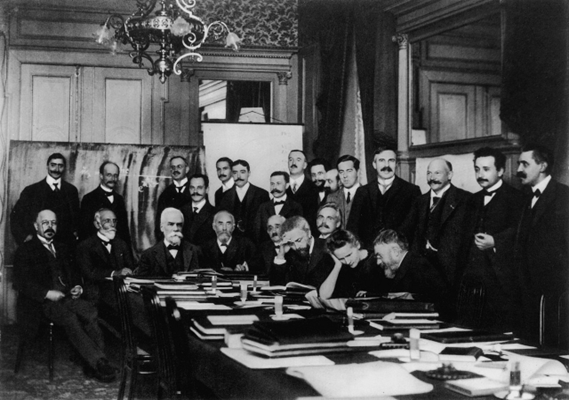
The Quantum era is usually traced to Max Planck’s introduction of the quantum hypothesis, which revolutionized our understanding of physics at the subatomic scale. Yet a phenomenon discovered a few years earlier by Marie Curie (1867–1934) demanded explanation within this new framework. Curie named the phenomenon radioactivity. Universally celebrated, she was awarded the 1903 Nobel Prize in Physics for this discovery and later the 1911 Nobel Prize in Chemistry for the discovery of two new elements, Radium and Polonium. She was the first scientist to receive two Nobel Prizes in different fields. The Solvay Conferences in Physics, by invitation only, began in 1911. For the next two decades, Marie Curie was the only woman to appear in the conference photographs (Fig 1, 2).
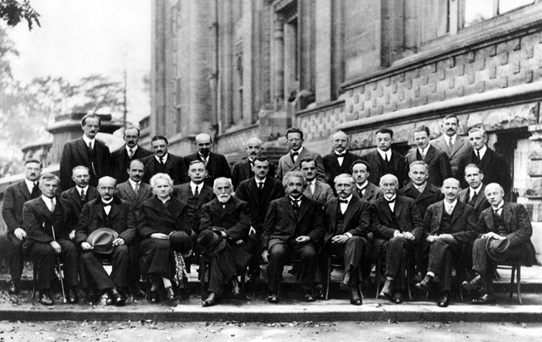
In the 1933 Solvay Conference photograph, only two additional women appear: Lise Meitner (1878-1968) and Irène Joliot-Curie (1897-1956), both pivotal to the understanding of beta decay and weak interactions. Meitner studied physics under Ludwig Boltzmann at the University of Vienna and often cited his lectures as a lasting inspiration. Her career spanned more than three decades, during which she made foundational contributions to nuclear and atomic physics. In 1911, Meitner and Otto Hahn were among the first to measure the energy spectrum of electrons emitted in beta decay. Although the situation was initially unclear, investigations by James Chadwick in 1914 and subsequent work through the 1920s revealed that beta electrons exhibited a continuous energy spectrum rather than discrete lines. This was confirmed calorimetrically in 1929 by Meitner and Wilhelm Orthmann. The apparent missing energy even led Niels Bohr to speculate that the law of conservation of energy may not hold in beta decay, a possibility that would have been catastrophic. The crisis was resolved when Pauli proposed the existence of a new particle, the neutrino, which carried away part of the decay energy. These experiments laid the foundation for Fermi’s theory of weak interactions, later made more precise by Sudarshan and Marshak (also by Richard Feynman and Murray Gellmann) and, ultimately, for the development of the Standard Model of particle physics. Yet, as it turned out, Lise Meitner’s most significant work still lay a few years ahead.
| Marie Curie: Barriers and Breakthroughs – In 1885, the Russian Empire controlled Poland and prohibited women from receiving higher education. As a result, Marie Curie studied at the underground Flying University—a secret school taught in private homes where women could learn science. – Marie Curie struggled with self-doubt, humility, and uncertainty despite her monumental achievements. She often described her early years in Paris as marked by hardship, doubting her abilities and fighting the belief that she did not belong to the elite scientific spaces. – Being the first woman to win a Nobel Prize, Marie Curie remains the only woman to receive two Nobel Prizes in two different scientific categories—physics and chemistry. |
Lise Meitner, together with Otto Hahn and Fritz Strassmann, designed and pursued a long series of experiments on neutron-induced reactions in uranium. Forced to flee Germany in July 1938 during the anti-Jewish persecutions, she could not participate in the experiments in the Berlin laboratory when the decisive results appeared. While she was the first woman to become a full professor in Germany during 1926, she lost this position under the Nuremberg Laws in 1935. She was driven into exile and could not stay to see the results of these experiments. Hahn and Strassmann found that when a uranium nucleus is irradiated with slow neutrons, it produces barium among the other reaction products. This was highly surprising, since one expected only the emission of nucleons or light fragments, and not a near-complete breakup of the nucleus as observed. The results were shared with Lise Meitner, who had fled Germany by this time. She and her nephew Otto Frisch worked out the physical mechanism of this break-up based on Bohr’s liquid-drop model of the nucleus. They coined the term nuclear fission, a process in which an enormous amount of energy — about a million times larger than that released in a typical chemical reaction — is liberated. This seminal work became the basis for all subsequent applications of nuclear energy, including nuclear reactors for power generation and, tragically, nuclear weapons developed for warfare. Despite the profound significance of this discovery, the 1944 Nobel Prize in Chemistry was awarded to Otto Hahn alone, excluding both Meitner and Strassmann. Hahn and Meitner are credited with the discovery of a new element Protactinium. Einstein reportedly referred to Meitner as “our own Marie Curie’’ and today her legacy is commemorated posthumously in the naming of element 109, Meitnerium.
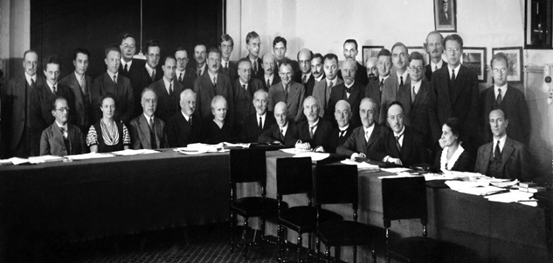
Irène Joliot-Curie, however, also faced her share of misfortune, even though, unlike Lise Meitner, she enjoyed a degree of scientific visibility as the daughter of Marie and Pierre Curie (in Fig 3, both Lise Meitner and Irène Joliot-Curie are seen). She and her husband Frédéric Joliot were recognised for their contribution to induced radioactivity and were awarded Nobel prize in Chemistry in 1935. This series of experiments had enormous influence on future developments in medical physics apart from fulfilling the long-standing alchemists’ dream of converting one element to another.
At around the same time, relativistic quantum mechanics, formulated by Dirac, had predicted the existence of a positively charged counterpart of the electron, the positron. Through their experiments, the Curies’ saw a hint of not only the positron, but also the neutron. However, they failed to see the full significance of these observations at the time. These discoveries were subsequently attributed to Carl David Anderson and James Chadwick. In 1933, Irène and Frédéric Curie went on to observe (beta-plus) decay, a process analogous to decay, but with the emission of a positron instead of an electron.
To complete this discussion of well-known women in the quantum world, we must also remember the fundamental contributions of Maria Goeppert Mayer and Chien -Shiung Wu, both of whom began their research careers in the 1930s. Maria Goeppert Mayer (1906-1972) worked under the supervision of Max Born on the theory of two-photon processes at the University of Göttingen. In her Ph.D thesis titled On elementary processes with two quantum jumps, she developed the first quantum-mechanical theory of two-photon transitions in atoms. Based on time-dependent perturbation theory she calculated the probability of an atomic electron absorbing two photons simultaneously. But experimental verification of simultaneous two-photon absorption was not possible during 1930’s, because radiation sources were too weak and detection techniques were not adequate. Goeppert-Mayer’s theoretical prediction had to wait for nearly 30 years. Shortly after the invention of the first laser, nonlinear optics experiments with second-harmonic generation at Bell labs confirmed two-photon absorption during 1961. In recognition of her pioneering theoretical work on two-photon processes, the unit for quantifying two-photon absorption cross sections is named the Goeppert–Mayer (GM) unit. Eugene Wigner described Goeppert-Mayer’s Ph.D thesis as a masterpiece of clarity and concreteness.
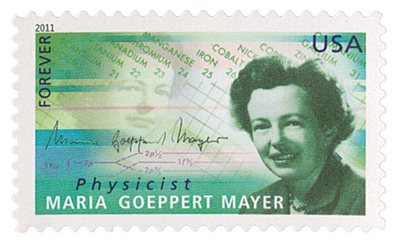
During 1935, Maria Goeppert Mayer proposed, for the first time, the possibility of double beta decay, in which a nucleus decays by emitting two electrons and two neutrinos in a single interaction. It took several decades for this process to be experimentally confirmed, and it was finally observed in the 1980s. Maria Goeppert Mayer was awarded the Nobel Prize in Physics in 1963 for her contributions to unravelling nuclear structure. The protons and neutrons in the nucleus occupy discrete levels forming a series of closed shells. Furthermore, the nucleon-nucleon interaction has a component of spin-orbit interaction which carries over to nucleon-nucleus interaction. This leads to further splitting of the levels within shells as explained by Maria Mayer. Despite the transformative impact of her research, she held a full professorship at the University of California only late in her career, in 1960. This reflects the institutional barriers faced by women scientists of her generation. Maria Goeppert Mayer was the second woman to win the Nobel Prize in Physics. Her legacy is commemorated not only in textbooks but also in public memory. For example, in 2011, the United States Postal Service issued a commemorative stamp in her honour (Fig 4).
Chien-Shiung Wu or more popularly C.S.Wu (1912-1997), who was born in China, carried out groundbreaking work in nuclear physics. She was initially enrolled at the University of Michigan but left after learning that women were not allowed through the main entrance! She subsequently moved to Berkeley, California, where she began working on beta decay. Luis Alvarez, a Nobel Prize–winning experimental physicist at the University of California, Berkeley, later remarked of Wu: She was the most talented experimental physicist I have ever met.” When two Chinese-born American physicists, T. D. Lee and C. N. Yang, proposedthat parity symmetry is violated in weak interactions – for example, in betadecay – the idea was received with considerable scepticism. Among theoreticalphysicists, symmetries are often regarded as exact, almost as a matter offaith. The violation of parity was particularly radical, as it implied a fundamentalpreference for handedness in nature. In 1956, Wu, now a professor atColumbia University, performed a series of elegant experiments that provideddecisive evidence for the violation of parity. This discovery revolutionized theunderstanding of weak nuclear and particle interactions and became one of thefoundational pillars upon which the present Standard Model rests. Wu’s experimentalwork, as also the work done by Lederman, Friedman and Telegdi,was instrumental in Lee and Yang winning the 1957 Nobel Prize in Physics. Itremains a historical tragedy that Wu’s revolutionary experimental contributionwas never formally recognized by the Nobel Committee. Nevertheless, in recognitionof her scientific stature, Chien-Shiung Wu has frequently been describedas the First Lady of Physics and, in popular accounts, as the Chinese Madame Curie.
We close this discussion of well-known women physicists who made seminal contributions to quantum physics and quantum field theory. Not all of them were honoured with the Nobel Prize, though such recognition would have been well deserved. There is a common thread running through all the examples discussed above. With the notable exception of Lise Meitner, they were primarily experimentalists. Meitner’s seminal contribution, by contrast, lay in providing the theoretical interpretation of nuclear fission, which explained the experimental results of Hahn and Strassmann.
| Emmy Noether: Symmetry and Conservation Laws In physics, Emmy Noether’s theorem addresses the fundamental symmetries of a physical system. It is a powerful result which states that every continuous symmetry of a system leads to a conserved physical quantity or a conservation law. For example, if the properties of a system remain unchanged under spatial rotations -that is, if the system possesses rotational symmetry – then angular momentum is conserved. Noether’s theorem is an extraordinarily powerful statement, as it significantly reduces the complexity of a physical problem once the symmetries of the system are known.Albert Einstein described Emmy Noether as “the most significant creative mathematical genius thus far produced since the higher education of women began.” in support of her academic position at Bryn Mawr College (a women’s college in Pennsylvania), where she had taken up a visiting professorship after fleeing Nazi Germany in 1933. |
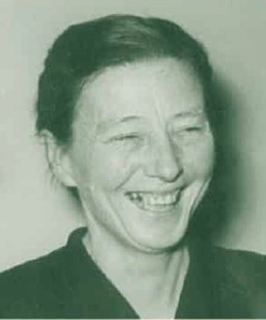
It is in this context that we recognize the contribution of Grete Hermann (Fig 5) (1901-1984), who was remarkable for contributing simultaneously to physics and philosophy at a time when women were scarcely present in either field. She deserves a special mention here even though her contribution to quantum mechanics was ignored for a long time until it was rediscovered by John Bell much later. She studied mathematics along with physics and philosophy in the University of Göttingen. She was among the earliest doctoral students of the eminent mathematician Emmy Noether (1882-1935). Noether’s students, many of whom went on to become distinguished mathematicians, were known as “Noether’s boys”, and Grete Hermann was the only woman among them. Her Ph.D. thesis, The Question of Finitely Many Steps in Polynomial Ideal Theory laid the groundwork for modern computer algebra by showing that many fundamental problems in polynomial ideal theory admit algorithmic solutions with computable bounds. While later methods such as Gröbner bases (1965) provide far more efficient implementations, Hermann’s work was the first to establish the constructive and decidable nature of these problems.
Grete Hermann shifted her focus towards philosophy and was influenced by the Marburg school of neo-Kantianism during late 1920s and early 1930s, after the completion of her doctoral work. She subsequently turned to the foundations of quantum mechanics, engaging critically with the emerging Copenhagen interpretation. Drawing on her background in mathematics and philosophy, Hermann analysed questions of causality, determinism, and the limits of knowledge in quantum theory. Her training under Emmy Noether sharpened her sensitivity to the structural and axiomatic features of physical theories, while her philosophical work emphasized a crucial distinction between causality as a regulative principle of knowledge and determinism as a metaphysical claim. From a Kantian perspective, causality presupposes a relation between cause and effect that is not derived from observations but instead underlies the interpretation of all experience. Hermann argued that quantum mechanics does not abolish causality but rather constrains it through the limits imposed by measurement and experimental context.
Around 1934, she engaged in discussions with Werner Heisenberg and Carl Friedrich von Weizsäcker on the meaning of uncertainty in quantum mechanics. The uncertainty principle, together with the inherently probabilistic nature of quantum outcomes, raised the question of whether causality could still be maintained in the strict Kantian sense, given the breakdown of determinism familiar from classical dynamics. At the time, critics and defenders alike often conflated causality with deterministic predictability, assuming that if outcomes are probabilistic, causality must be abandoned. Since the uncertainty principle obstructs exact prediction, it was therefore taken to undermine causality itself. Hermann pointed out that this inference is incorrect. She argued that causality in the Kantian sense refers to the lawful dependence of events, whereas deterministic predictability concerns the ability to calculate exact future outcomes.
These two notions, she emphasized, need not coincide. Hermann’s analysis of quantum mechanics culminated in her 1935 paper, “The foundations of quantum mechanics in the philosophy of nature”, one of the earliest systematic attempts to reconcilequantum theory with a Kantian account of causality. She emphasized thatquantum theory clarifies rather than contradicts the principle of causality bydisentangling it from unwarranted assumptions about absolute predictability. She concluded:
“The theory of quantum mechanics forces us to drop the assumption of the absolute character of knowledge about nature, and to deal with the principle of causality independently of this assumption. Quantum mechanics has therefore not contradicted the law of causality at all, but has clarified it and has removed from it other principles which are not necessarily connected to it.”[1]
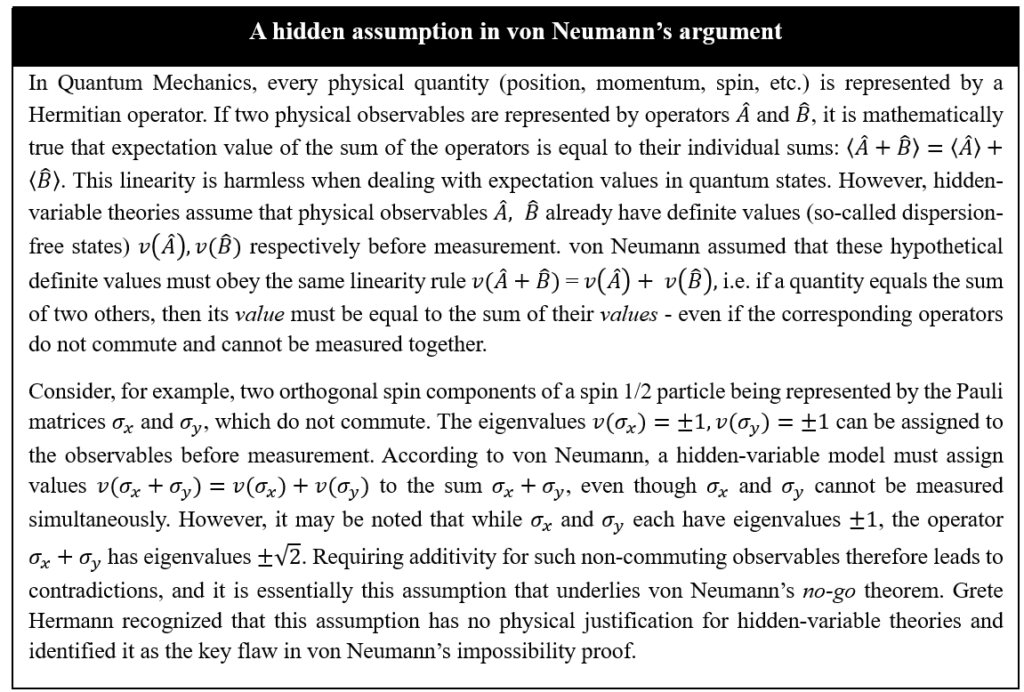
While she was working on the notion of causality in quantum mechanics, Hermann came across the celebrated no-go theorem of John von Neumann, presented in his 1932 book Mathematical Foundations of Quantum Mechanics, in which he appeared to prove that the results of quantum mechanics cannot be reproduced by any hidden-variable theory. The proof relied on the assumption that if a physical quantity is represented by the sum of two operators , then the value assigned to that quantity – even in a hypothetical dispersion-free (hidden-variable) state – must be equal to the sum of the values assigned to the individual operators. von Neumann applied this assumption even to non-commuting observables that cannot be measured simultaneously. Within the Hilbert-space framework of Quantum Mechanics, he then showed that no dispersion-free states exist that satisfy this additivity condition and concluded that hidden-variable theories – which would require such states – are therefore impossible without abandoning standard Quantum Mechanics. The authority of John von Neumann was so great that it was accepted without much criticism.
Grete Hermann held strong political views rooted in the socialist movement. Owing to her outspoken anti-Nazi stance, she was forced to leave Germany in 1936, first fleeing to Denmark and later to England, as her personal safety was increasingly at risk. After the end of the Second World War, she returned to Germany and died in her hometown of Bremen in 1984.
Hermann maintained a lively interest in Quantum Mechanics throughout her life, although she did not make further technical contributions to the field. Despite the significance of her early critique of von Neumann’s proof, her work was largely ignored – even by eminent scientists who were aware of it – for several decades. In recent years, however, her contributions have attracted renewed attention, most notably through the comprehensive historical study of Grete Hermann as in Between Physics and Philosophy by Crull and Bacciagaluppi (2016).
Grete Hermann’s trajectory illustrates a wider twentieth-century pattern: Foundational and experimental work in physics carried out by women was routinely marginalized or recognized only much later. A striking parallel example – this time from experimental particle physics – appears in the career of Bibha Chowdhuri, an Indian physicist who contributed to the early development of particle detection methods.
In 1950, the Nobel Prize in physics was awarded to the British physicist Cecil Powell for his development of the photographic method of studying nuclear processes and his discoveries regarding mesons made with this method. In a book written later, Powell himself noted[2]:
“In 1941, Bose and Chaudhuri had pointed out that it is possible, in principle, to distinguish between the tracks of protons and mesons in an emulsion . . . and their work represents the first approach to the scattering method of determining momenta of charged particles by observation of their tracks in emulsion.”
Who was this “Chaudhuri” who, in a more equitable scientific world, might well have shared the Nobel recognition with Powell? We outline here a brief account of the remarkable physicist Bibha Chowdhuri (1913–1991) – a story of determination and perseverance in a field dominated overwhelmingly by men.
Bibha Chowdhuri was born in 1913 into a relatively progressive Bengali family that placed a high value on education. She was the only woman to complete a master’s degree in physics at the University of Calcutta in 1936. She subsequently joined the cosmic-ray research group of Debendra Mohan Bose, one of the pioneers of cosmic-ray physics studies in India. Although initially reluctant, Bose eventually accepted her as his student. At the Indian Science Congress session held in Calcutta in 1938, the eminent German physicist Walter Bothe drew their attention to the pioneering work of Marietta Blau and Hertha Wambacher, who had introduced the use of photographic nuclear emulsions as particle detectors. This technique would soon play a decisive role in cosmic-ray and particle-physics research and strongly influence the experimental direction pursued by Bose and Chowdhuri in the years that followed. They began systematic studies using photographic emulsions to investigate cosmic-ray interactions. Working under challenging experimental conditions and with limited resources, Chowdhuri played a central role in adapting and applying the emulsion technique to distinguish between different charged particles produced in cosmic-ray events. Their analysis revealed a large number of tracks that did not correspond to protons but instead indicated the presence of much lighter particles, referred to in their papers as mesotrons.
| Yukawa’s meson and the cosmic-ray search Around 1935, Hideki Yukawa proposed a theory of the nuclear force responsible for binding nuclei. According to Yukawa, this force is mediated by a hitherto unknown particle, the π-meson (or pion), referred to as the mesotron in the early literature. An estimate of the particle’s mass from the range of the nuclear force yields a value of roughly 200 times the electron mass. Motivated by this prediction, Chowdhuri and Bose embarked on a systematic study of cosmic rays. They established three high-altitude stations at Darjeeling, Sandakphu, and in Tibet, with altitudes ranging from just over 2000 m to about 4500 m. Photographic emulsion plates of 70 μm thickness were exposed for 150–200 days, developed, and scanned under high-power microscopes. Track calibration was performed using proton tracks of known energies. Chowdhuri frequently travelled between the high-altitude sites and Calcutta for analysis, sometimes on horseback. |
In a series of papers[3] published between 1940 and 1942 in the journal Nature, Bose and Chowdhuri estimated the mass of these particles to be of the order of 160–300 times the electron mass, consistent with the meson mass needed by Yukawa’s theory. This work marked one of the earliest steps toward the scattering method for momentum determination in emulsion detectors—a method that would later become standard in particle physics.
Further progress was curtailed by the Second World War, which prevented access to higher-sensitivity emulsion plates. In the immediate postwar years, Cecil Powell obtained improved emulsions and, using methods anticipated by Bose and Chowdhuri, was able to carry out more precise measurements that led to the identification of the pion – a work that ultimately received Nobel recognition.
Bibha Chowdhuri moved to Manchester immediately after the war to work with the group of P. M. S. Blackett for her Ph.D. She completed her Ph.D. under the well-known cosmic-ray physicist John Graham Wilson (Fig 6). She returned to India in 1949 and joined the cosmic-ray research group at TIFR, only to leave in 1953. She then returned to Calcutta, taking up a position at Bengal Engineering College for reasons that remain unclear. This appointment, however, did not last long, heralding a nomadic period in her life that extended over the next decade or so. She first went to Paris, spent several years there, and subsequently moved to Michigan and then to MIT, using her expertise to good effect in her research at these places.
| Marietta Blau and the Birth of Nuclear Emulsion Detectors The cosmic-ray experiments that led to the identification of the pion relied crucially on nuclear emulsion detectors, whose development was pioneered by Marietta Blau (1894–1970). Blau, who began her work as a volunteer scientist at the Radium Institute in Vienna, introduced highly sensitive stacks of photographic plates capable of recording tracks of charged particles such as protons and alpha particles. Exposure to radiation produced microscopic tracks in the emulsions; their length and curvature (in a magnetic field) indicated energy and momentum of the particle.Blau devoted considerable effort to improving detector performance by optimising emulsion thickness, grain size, and packing density. An important advantage of nuclear emulsions was their ability to be exposed for extended periods, allowing rare cosmic-ray events to accumulate for later microscopic analysis. By the late 1930s and early 1940s, emulsion techniques had become one of the most powerful tools in cosmic-ray and early particle-physics research.Despite her foundational contributions, Blau’s career was deeply affected by political upheavals and discrimination. Because of her Jewish heritage, she was denied stable academic positions in Europe. This forced her to leave Vienna and work in Oslo, and later in Mexico, before eventually returning to Austria in the 1960s. Blau was awarded the Erwin Schroedinger Prize of the Austrian Academy of Sciences in 1962. Despite her seminal role in developing nuclear emulsion detectors, her contributions remained largely under-recognized within the broader history of particle physics. The techniques of nuclear emulsion detection that she developed laid the experimental groundwork for later studies, including the pioneering investigations of cosmic-ray mesons by Bose and Chowdhuri. |
Around 1959, Bibha Chowdhuri took up a position at the Physical Research Laboratory (PRL), Ahmedabad, as a Senior Research Fellow, a temporary appointment well below her experience and pay grade. During this period, she helped set up a muon detector at the Kolar Gold Fields (KGF) underground laboratory; the experiment operated for several years and marked her last major research contribution, among many achievements extending well beyond the discovery of the pion in the early 1940s. After nearly seven years in a temporary role at PRL, she was finally made permanent, but was offered an entry-level position comparable to the one she had held at TIFR some fifteen years earlier. This is particularly striking given that she continued to contribute actively to research and teaching throughout the period and until her retirement in 1976.
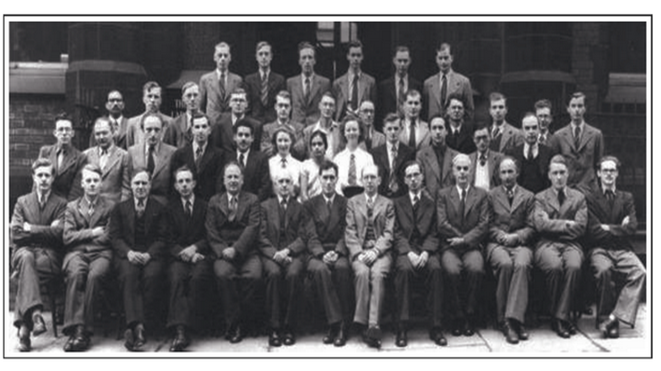
Among Bibha’s students were several who later became eminent scientists. Notably, K. Kasturirangan, who went on to lead the Indian Space Research Organisation, recalled Chowdhuri’s incisive teaching and mentorship during his time at PRL. Another of her students, the cosmic-ray physicist Palahalli Vishwanath, later reflected on the formative influence she had on his early career. Bibha Chowdhuri died in 1991.
These brief sketches highlight only a few of the women who contributed substantially to the development of foundations of quantum physics, nuclear and particle physics. Some achieved recognition during their lifetimes, but many were neither celebrated nor even remembered until recently. Over the past hundred years, there have been many such cases. If the Nobel Prize in Physics is taken as a crude measure of recognition, the record is abysmal: For more than half a century after Marie Curie’s 1903 award, no other woman received the prize, and to date only a handful have done so at all. The list of honourable omissions is long. The “Boys’ Club” still endures.
Acknowledgements: We thank Vivek Datar for a critical reading of the draft and comments on this article. We gratefully acknowledge Naba Mondal in the preparation of this article and for permission to use the photograph of Bibha Chowdhuri at Manchester, and for his insightful article. We also thank Rajaram Nityananda for pointing out Maria Goeppert-Mayer’s work on two-photon processes.
Further Reading
- L. Halpern, M. M. Shapiro, Out of the shadows: Contributions of twentieth century women to physics, eds: N. Byers and G. Williams, Cambridge U. Press, New York (2006). A collection of historical essays examining the contributions of women to twentieth-century physics, including key figures in quantum theory, spectroscopy, nuclear physics, and particle detection.
- R. L. Sime, Lise Meitner: A life in Physics, University of California Press (1996). One of the finest and moving biographies of any scientist ever written.
- R. Dahn, Highlighting Women in Quantum History, Physics Today, Vol. 78, No. 7 (2025). https://physicstoday.aip.org/features/highlightingwomen-in-quantum-history
- S. Perkowitz, Grete Hermann: The quantum physicist who challenged Werner Heisenberg and John von Neumann, Physics World, (2025). https://physicsworld.com/a/grete-hermann-the-quantum-physicist-whochallenged-werner-heisenberg-and-john-von-neumann/
- N. K. Mondal, Bibha Chowdhuri and Her Remarkable Scientific Endeavours, Resonance – Journal of Science Education, 28, 1469-1504 (2024). https://doi.org/10.1007/s12045-023-1686-1
[1] G. Hermann, The foundations of quantum mechanics in the philosophy of nature, Abhandlungen der Fries’schen Schule, Neue Folge 6, 75–152 (1935).
[2] C. F. Powell, The Study of Elementary Particles by the Photographic Method (Pergamon Press, London, 1959), Chap. 2.
[3] D. M. Bose and B. Chowdhuri, Nature 145, 202–203 (1940); Nature 146, 451–452 (1940); Nature 149, 146–147 (1942).